

Juneteenth Celebrates the Underground Railroad That Ran Into Mexico
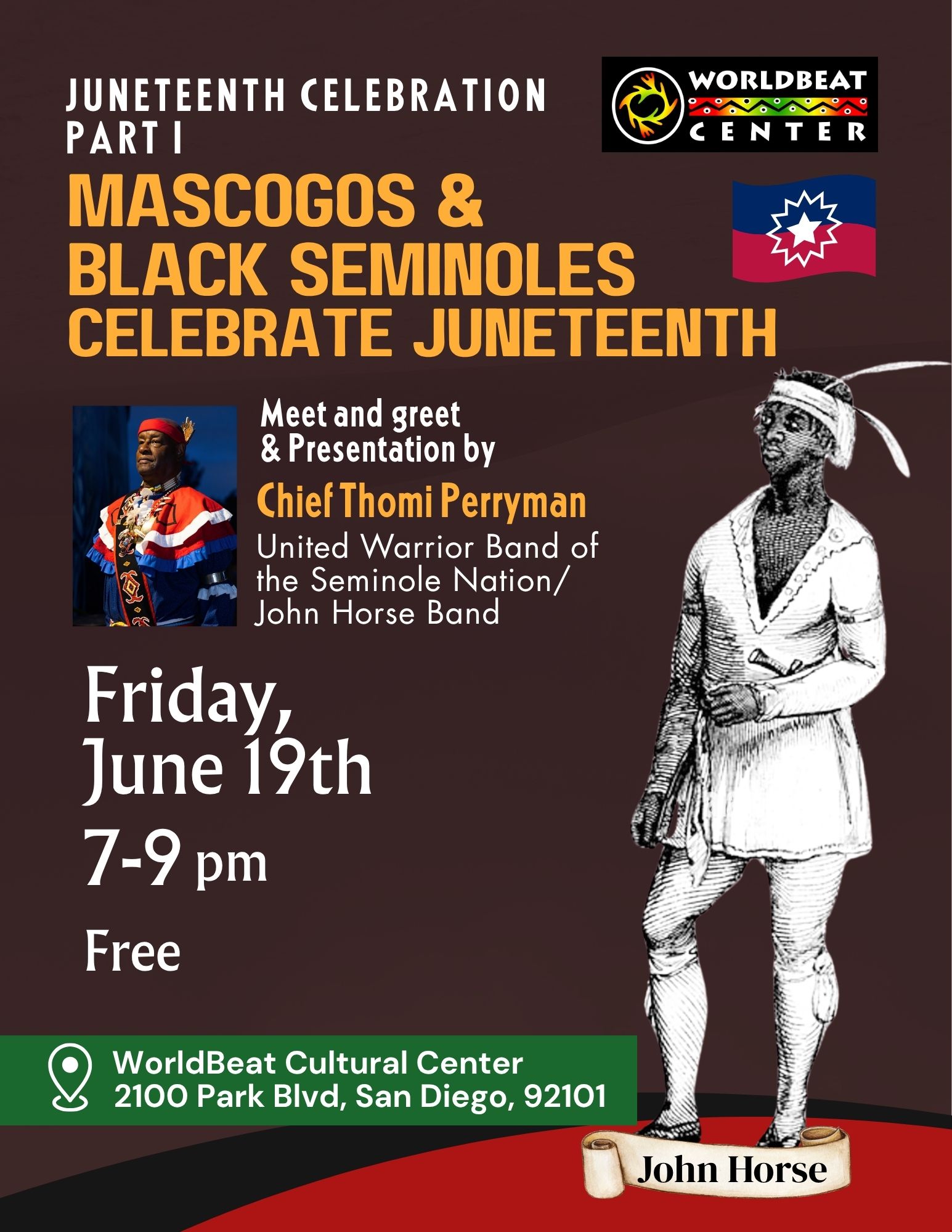
On June 19, 1865, Union soldiers arrived in Galveston, Texas and delivered the news that enslaved people were finally free, more than two months after the Civil War had already ended. That day became Juneteenth. But decades before that announcement was ever made, a community of freedom seekers had already crossed the Rio Grande and built a new life in Mexico rather than wait for America to catch up.
This Juneteenth, WorldBeat Cultural Center invites you to go deeper into the holiday’s roots.
Join Chief Thomi Perryman for a visual presentation that connects the spirit of Juneteenth to one of its most extraordinary living legacies: the Mascogos of Nacimiento de los Negros, an Afro-Mexican community in Coahuila, Mexico that has celebrated Juneteenth for over 150 years and never stopped.
They call it Día de los Negros. Every June 19th, the Mascogos gather with music, dance, and la cabalgata, a thundering 20-mile parade of horseback riders that moves through the Mexican landscape as a living declaration: we remember, and we are still here.
Who are the Mascogos? Their story begins with the Black Seminoles, a people born from the alliance between freedom-seeking Africans and Native American nations during the Seminole Wars, one of the longest and most fiercely fought conflicts in American history. When Mexico abolished slavery in 1829 under President Vicente Guerrero (himself a man of African descent), the Rio Grande became a river of liberation. Thousands crossed south, not north, choosing freedom on their own terms.
Chief Thomi Perryman will trace the visionary leadership of John Horse, known in Mexico as Juan Caballo, who guided Black Seminoles and Native Americans out of Indian Territory in present day Oklahoma all the way into Mexico, where they planted roots that remain to this day. With only a few hundred Mascogos surviving today, their continued celebration of Juneteenth is not just tradition. It is testimony.
This Juneteenth, discover a chapter of the story that has been kept alive south of the border for generations. Come and witness what freedom looks like when a community refuses to let it be forgotten.